MACBETH
Duncan
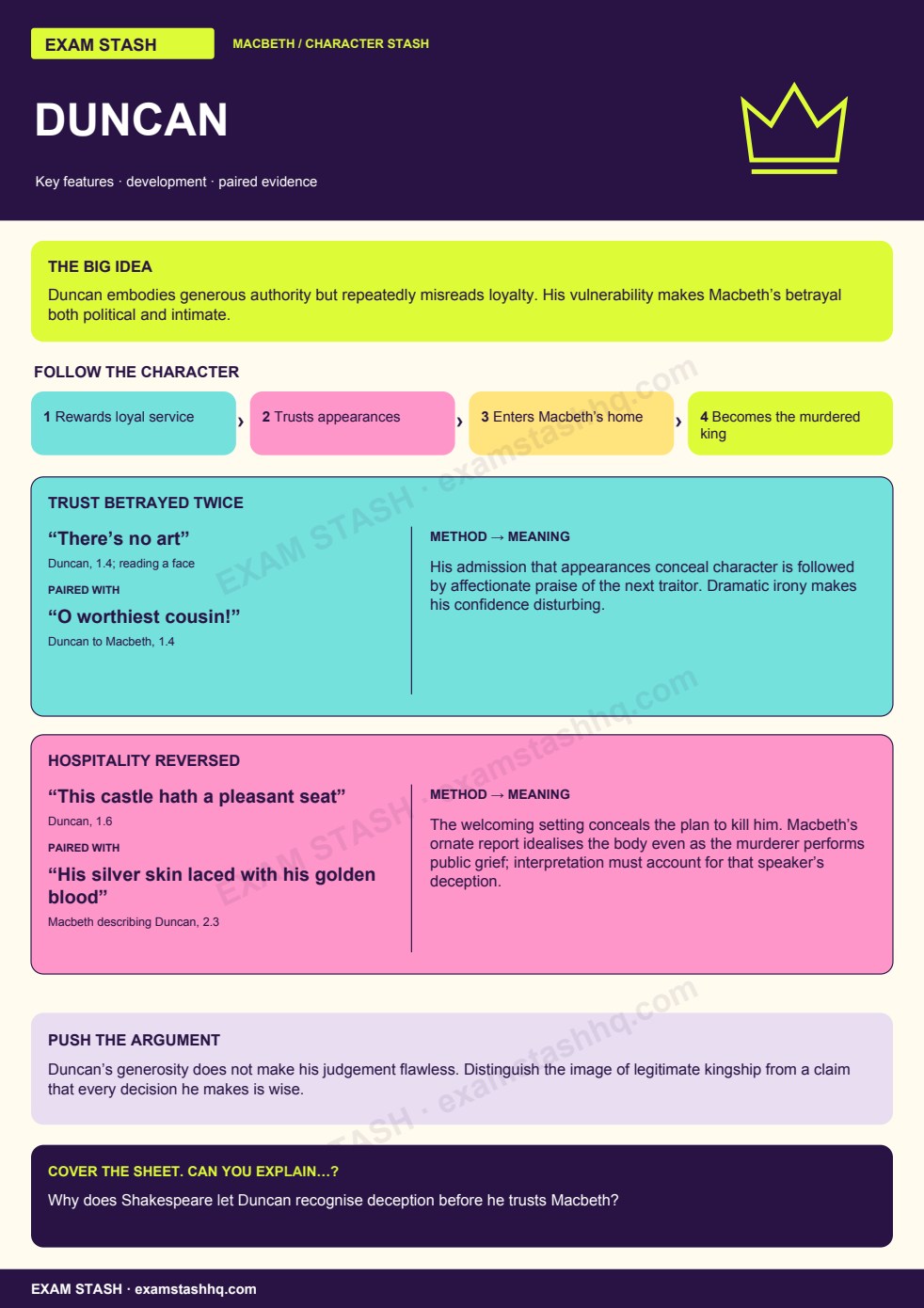
Duncan embodies generous authority but repeatedly misreads loyalty. His vulnerability makes Macbeth’s betrayal both political and intimate.
Read the accessible text and study notes
Duncan
Duncan embodies generous authority but repeatedly misreads loyalty. His vulnerability makes Macbeth’s betrayal both political and intimate.
Rewards loyal service → Trusts appearances → Enters Macbeth’s home → Becomes the murdered king
Trust betrayed twice
“There’s no art” — Duncan, 1.4; reading a face
paired with “O worthiest cousin!” — Duncan to Macbeth, 1.4
His admission that appearances conceal character is followed by affectionate praise of the next traitor. Dramatic irony makes his confidence disturbing.
Hospitality reversed
“This castle hath a pleasant seat” — Duncan, 1.6
paired with “His silver skin laced with his golden blood” — Macbeth describing Duncan, 2.3
The welcoming setting conceals the plan to kill him. Macbeth’s ornate report idealises the body even as the murderer performs public grief; interpretation must account for that speaker’s deception.
Push the argument
Duncan’s generosity does not make his judgement flawless. Distinguish the image of legitimate kingship from a claim that every decision he makes is wise.
Recall
Why does Shakespeare let Duncan recognise deception before he trusts Macbeth?
Read Macbeth. Scene locations are used because page numbers vary by edition.