POWER AND CONFLICT
Bayonet Charge
Physical terror strips the soldier of the abstract ideals that might once have justified battle.
Read the accessible text and study notes
What happens?
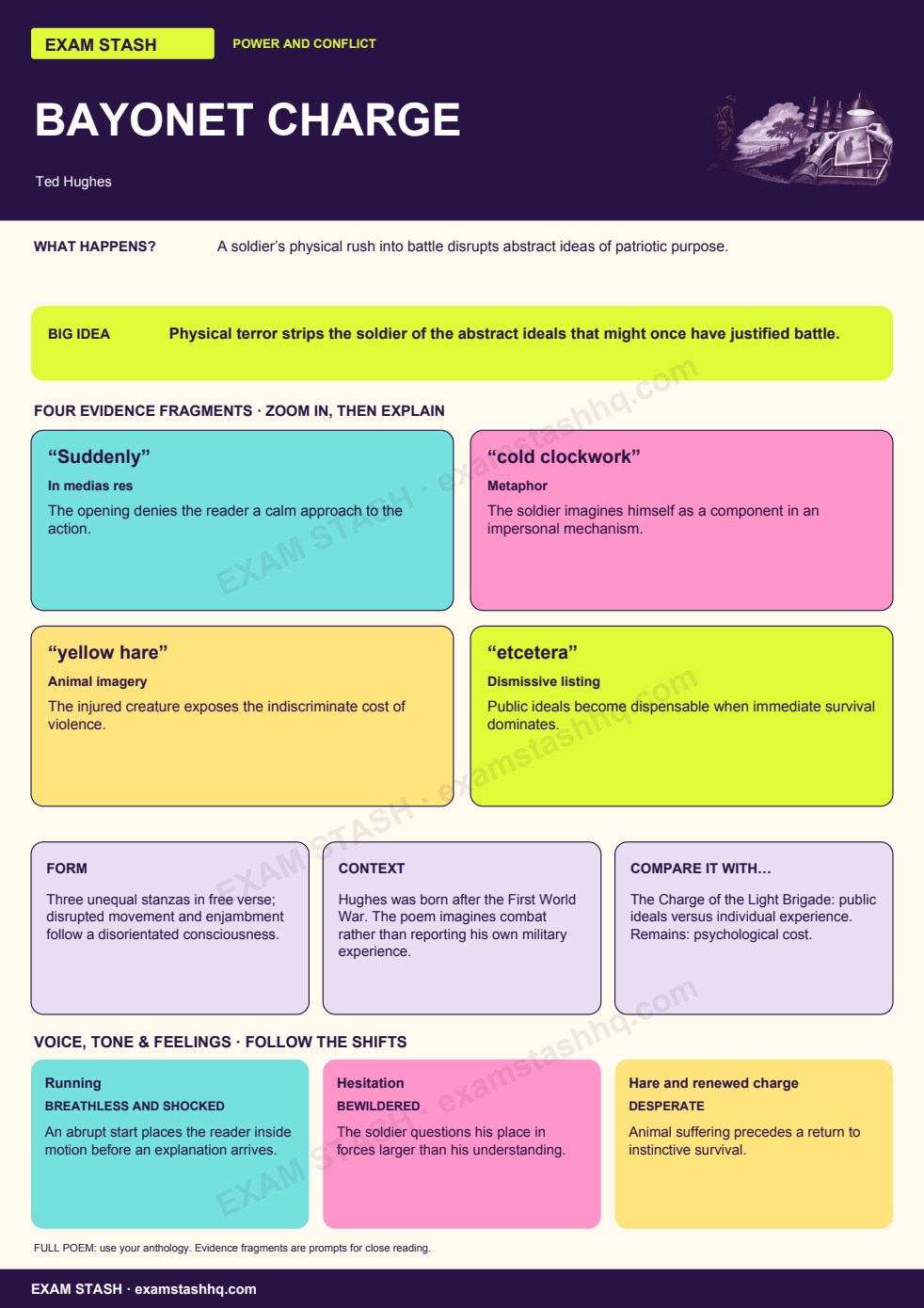
A soldier’s physical rush into battle disrupts abstract ideas of patriotic purpose.
Big idea
Physical terror strips the soldier of the abstract ideals that might once have justified battle.
“Suddenly”
In medias res — The opening denies the reader a calm approach to the action.
“cold clockwork”
Metaphor — The soldier imagines himself as a component in an impersonal mechanism.
“yellow hare”
Animal imagery — The injured creature exposes the indiscriminate cost of violence.
“etcetera”
Dismissive listing — Public ideals become dispensable when immediate survival dominates.
Form
Three unequal stanzas in free verse; disrupted movement and enjambment follow a disorientated consciousness.
Context
Hughes was born after the First World War. The poem imagines combat rather than reporting his own military experience.
Compare
The Charge of the Light Brigade: public ideals versus individual experience. Remains: psychological cost.
Voice, tone and feelings
Running · Breathless and shocked — An abrupt start places the reader inside motion before an explanation arrives.
Hesitation · Bewildered — The soldier questions his place in forces larger than his understanding.
Hare and renewed charge · Desperate — Animal suffering precedes a return to instinctive survival.
Recall
How do physical sensations challenge patriotic abstractions?
Read the full poem in your own AQA anthology. Anthology information and source.