WORLDS AND LIVES
Shall earth no more inspire thee
Nature’s imagined voice offers an isolated mind a forceful invitation back into relationship.
Read the accessible text and study notes
What happens?
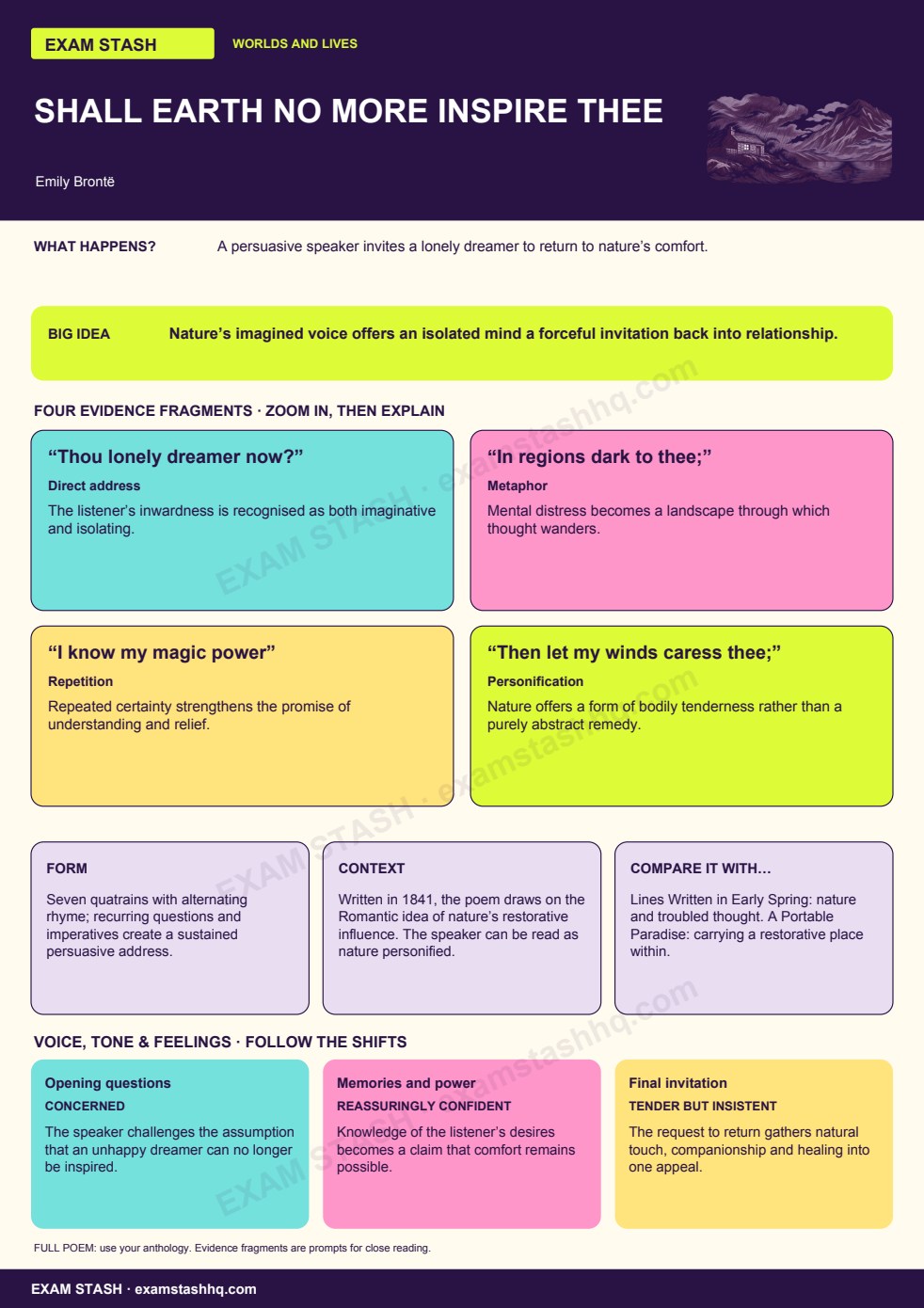
A persuasive speaker invites a lonely dreamer to return to nature’s comfort.
Big idea
Nature’s imagined voice offers an isolated mind a forceful invitation back into relationship.
“Thou lonely dreamer now?”
Direct address — The listener’s inwardness is recognised as both imaginative and isolating.
“In regions dark to thee;”
Metaphor — Mental distress becomes a landscape through which thought wanders.
“I know my magic power”
Repetition — Repeated certainty strengthens the promise of understanding and relief.
“Then let my winds caress thee;”
Personification — Nature offers a form of bodily tenderness rather than a purely abstract remedy.
Form
Seven quatrains with alternating rhyme; recurring questions and imperatives create a sustained persuasive address.
Context
Written in 1841, the poem draws on the Romantic idea of nature’s restorative influence. The speaker can be read as nature personified.
Compare
Lines Written in Early Spring: nature and troubled thought. A Portable Paradise: carrying a restorative place within.
Voice, tone and feelings
Opening questions · Concerned — The speaker challenges the assumption that an unhappy dreamer can no longer be inspired.
Memories and power · Reassuringly confident — Knowledge of the listener’s desires becomes a claim that comfort remains possible.
Final invitation · Tender but insistent — The request to return gathers natural touch, companionship and healing into one appeal.
Recall
How does the speaker make reassurance sound powerful?
Read the full poem in your own AQA anthology. Anthology information and source.